Fixing match fixing

You have no idea how disappointed I am in the latest scandal to hit International cricket. Not because I’m a huge cricket fan. Actually, it is one of the few sports I can take or leave. No, I’m disappointed because the inevitable naysayers start pointing fingers in the direction of the legal and legitimate betting operations that are actually doing more to clean up sport than most people imagine.

My old boss likes to use a tidy analogy on the subject; that blaming the gambling industry for corruption in sport is a bit like holding Boots (the chemist) responsible for the illegal trade in cocaine. I think he makes a very good point.

I was told last year by someone who knows these things that every time India play a test match around $1bn is gambled illegally in India. I read another estimate today written a few years ago, putting the figure closer to $25bn a year even back then.

No wonder with numbers like that that criminal syndicates control these illegal gambling operations, and that they can afford to make it worth their while to ensure they always have an edge when it comes to predicting the outcome of a match, or indeed the outcome of small, tactical ‘spot’ bets during a match.

Such opportunities are dramatically reduced where gambling is properly controlled, licensed and regulated. Where gambling companies only accept bets from customers who they know. Where gambling companies enter into agreements with sporting authorities to voluntarily share information and intelligence about suspicious betting patterns and who is behind them.

Only online betting creates this transparency and provides a level playing field for every customer. Like stock exchanges across the globe know full well, integrity of the markets is everything. Without it, customer confidence is eroded and liquidity will eventually dry up. In fact I’m surprised that traditional bookmakers are allowed to accept over the counter bets from people who walk in off the street without knowing who these people are, but that’s another story.

Match fixing allegations go back to time immemorial, and it is inevitable that pressure will be brought to bear on individuals to prostitute themselves and their sport either through fear or greed, until such time as governments step up to the mark and properly regulate the activity and thereby cut out the criminals currently profiteering from their inertia.
Out of chaos comes discovery

My name is Jon and I’m an addict.

I’ve been a junkie for as long as I can remember. These are some of the symptoms of my condition:

  • A constant craving to find alternative ways to do things.
  • A constant desire to find alternative routes to get from A to B. And then back again.
  • I’m never on time. Sometimes I’m early; sometimes I’m late – but never on time.
  • A refusal to sit on the same seat on the train to work every day. I’d rather stand thank you.
  • A pathological hatred of holiday itineraries. And I mean hatred!
  • People who go back to the same hotel every year scare me. Why would you want to do that?
  • An itch to try new dishes in restaurants. Even if I don’t really like the sound of them. Unless they contain celery.
  • The word ‘routine’ makes me break out in a cold sweat.
  • The only thing I ever worry about is not worrying about anything.
  • I never read instructions. Especially IKEA’s.

I’m a change junkie. I love it and don’t ever want that to change. Er, hang on, let me think about that one…

Some would describe my condition as somewhat chaotic.

I say out of chaos comes discovery – and isn’t that what life is all about?

The Communications Revolution according to Stockholm

On 15th June 2010, the World Public Relations Forum gathered in Stockholm. PR practitioners, researchers and educators from every continent and over 20 countries ratified the Stockholm Accords, a new manifesto re-affirming the importance of PR and Communication Management in organisational success.

I must confess when I first read the Stockholm Accords it came across as a bit of a last gasp from an industry in its death throes. An industry which recognises it has to adapt or die in the face of a social media and networked organisation tidal wave which threatens to sweep aside the old order.

Let me remind you. Like it or not, it isn’t about mass communications anymore – it’s about masses of communicators.

The authors of the Stockholm Accords spelled it out quite clearly. Their objective was to launch a “global public relations program for the public relations profession” in a “conscious and planned effort to argue the value of public relations”. Oh dear thought I – more PR spin.

Then I read a magnificent blog post by my friend Mike Klein, which triggered a few dormant neurones into life and I saw that I had been missing something really quite exciting.

It’s not about the huffing a puffing of PR practitioners desperately trying to justify their existence. It’s about the very real convergence of two previously distinct endeavours. It’s about external and internal communications coming together. It’s about cross functional “strategic communication” emerging as an indispensable driver, definer and guardian of corporate strategy and reputation.

On page 12 of the Accords, one of its architects Toni Muzi Falconi acknowledges that even the most empowered public relations director cannot realistically hope to directly monitor more than ten percent of the communicative behaviour of her organisation. It has probably always been thus – however the difference today is that the communicative behaviour of the organisation can spread across the globe, into every digital nook and cranny within seconds. The old order still sees this as a threat not an opportunity. It is both of course.

On the same page comes the welcome recognition that much of the value created by the organisation comes from fuzzy (not linear) and immaterial networks that normally disrupt the distinction between internal and external audiences. I say welcome, because if you don’t recognise a problem it is very hard to fix it, and I fear that too many communications professionals continue to bury their heads in the sand over this one.

Furthermore, I absolutely love the assertion, actually, let’s call it recognition, that the most important element of communication management is understanding how an organisation’s reputation depends largely on the actions of employees. My definition of action includes words and behaviour; I trust theirs does too.

Some of the language used in the Accords worries me a bit. The authors talk of coordination and oversight to ensure consistency of content, actions and behaviours. This smacks a bit of the old corporate communications paradigm.

Sadly, the authors chose to call it coordination of internal and external communications, not convergence.

I may just have a bash at getting that amended…

Do you believe in ghosts?

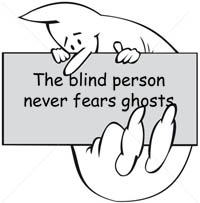
There is an old Burmese saying which goes “the blind person never fears ghosts”. I suspect there are millions of ‘blind’ people out there reading blogs and following tweeps in blissful ignorance of the fact that they are victims of a subtle yet deliberate deception, and the person they believe they are listening to is not who they imagine.

I wrote a piece on ghost blogging last month and was delighted today to have the opportunity to listen to a fascinating debate on the subject by two real heavyweights. Marketing Magazine dubbed Mitch Joel the Rock Star of Digital Marketing. His Six Pixels of Separation is a well respected blog and 19k followers on Twitter is not too shabby. Mitch is in the blue corner, arguing, like me against ghost blogging.

In the red corner stands Mark Schaefer, marketing consultant extraordinaire, with an equally not too shabby 14k followers on Twitter.

Listening to the debate you get the feeling that Mark would love to agree with Mitch, and indeed on several occasions he clearly does agree on a fundamental and emotional level. The bottom line for me was that he could not allow himself to agree on a practical level because he has a vested interest in promoting ghost writing to his own clients.

If you are interested in the morality and practicality of ghost blogging, try and find 40 minutes to listen to these boys – it is worth every second.