Out of chaos comes discovery

My name is Jon and I’m an addict.

I’ve been a junkie for as long as I can remember. These are some of the symptoms of my condition:

  • A constant craving to find alternative ways to do things.
  • A constant desire to find alternative routes to get from A to B. And then back again.
  • I’m never on time. Sometimes I’m early; sometimes I’m late – but never on time.
  • A refusal to sit on the same seat on the train to work every day. I’d rather stand thank you.
  • A pathological hatred of holiday itineraries. And I mean hatred!
  • People who go back to the same hotel every year scare me. Why would you want to do that?
  • An itch to try new dishes in restaurants. Even if I don’t really like the sound of them. Unless they contain celery.
  • The word ‘routine’ makes me break out in a cold sweat.
  • The only thing I ever worry about is not worrying about anything.
  • I never read instructions. Especially IKEA’s.

I’m a change junkie. I love it and don’t ever want that to change. Er, hang on, let me think about that one…

Some would describe my condition as somewhat chaotic.

I say out of chaos comes discovery – and isn’t that what life is all about?

The Communications Revolution according to Stockholm

On 15th June 2010, the World Public Relations Forum gathered in Stockholm. PR practitioners, researchers and educators from every continent and over 20 countries ratified the Stockholm Accords, a new manifesto re-affirming the importance of PR and Communication Management in organisational success.

I must confess when I first read the Stockholm Accords it came across as a bit of a last gasp from an industry in its death throes. An industry which recognises it has to adapt or die in the face of a social media and networked organisation tidal wave which threatens to sweep aside the old order.

Let me remind you. Like it or not, it isn’t about mass communications anymore – it’s about masses of communicators.

The authors of the Stockholm Accords spelled it out quite clearly. Their objective was to launch a “global public relations program for the public relations profession” in a “conscious and planned effort to argue the value of public relations”. Oh dear thought I – more PR spin.

Then I read a magnificent blog post by my friend Mike Klein, which triggered a few dormant neurones into life and I saw that I had been missing something really quite exciting.

It’s not about the huffing a puffing of PR practitioners desperately trying to justify their existence. It’s about the very real convergence of two previously distinct endeavours. It’s about external and internal communications coming together. It’s about cross functional “strategic communication” emerging as an indispensable driver, definer and guardian of corporate strategy and reputation.

On page 12 of the Accords, one of its architects Toni Muzi Falconi acknowledges that even the most empowered public relations director cannot realistically hope to directly monitor more than ten percent of the communicative behaviour of her organisation. It has probably always been thus – however the difference today is that the communicative behaviour of the organisation can spread across the globe, into every digital nook and cranny within seconds. The old order still sees this as a threat not an opportunity. It is both of course.

On the same page comes the welcome recognition that much of the value created by the organisation comes from fuzzy (not linear) and immaterial networks that normally disrupt the distinction between internal and external audiences. I say welcome, because if you don’t recognise a problem it is very hard to fix it, and I fear that too many communications professionals continue to bury their heads in the sand over this one.

Furthermore, I absolutely love the assertion, actually, let’s call it recognition, that the most important element of communication management is understanding how an organisation’s reputation depends largely on the actions of employees. My definition of action includes words and behaviour; I trust theirs does too.

Some of the language used in the Accords worries me a bit. The authors talk of coordination and oversight to ensure consistency of content, actions and behaviours. This smacks a bit of the old corporate communications paradigm.

Sadly, the authors chose to call it coordination of internal and external communications, not convergence.

I may just have a bash at getting that amended…

Do you believe in ghosts?

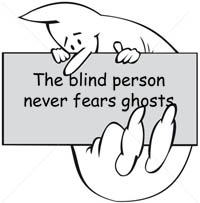
There is an old Burmese saying which goes “the blind person never fears ghosts”. I suspect there are millions of ‘blind’ people out there reading blogs and following tweeps in blissful ignorance of the fact that they are victims of a subtle yet deliberate deception, and the person they believe they are listening to is not who they imagine.

I wrote a piece on ghost blogging last month and was delighted today to have the opportunity to listen to a fascinating debate on the subject by two real heavyweights. Marketing Magazine dubbed Mitch Joel the Rock Star of Digital Marketing. His Six Pixels of Separation is a well respected blog and 19k followers on Twitter is not too shabby. Mitch is in the blue corner, arguing, like me against ghost blogging.

In the red corner stands Mark Schaefer, marketing consultant extraordinaire, with an equally not too shabby 14k followers on Twitter.

Listening to the debate you get the feeling that Mark would love to agree with Mitch, and indeed on several occasions he clearly does agree on a fundamental and emotional level. The bottom line for me was that he could not allow himself to agree on a practical level because he has a vested interest in promoting ghost writing to his own clients.

If you are interested in the morality and practicality of ghost blogging, try and find 40 minutes to listen to these boys – it is worth every second.

Trust everybody – but cut the cards

I make no apology for devoting a third consecutive post to the issue of trust. It’s important peeps – and it’s topical.

Deloitte’s fourth annual Ethics & Workplace Survey was published this week and surprise surprise, lack of trust and transparency are the dominant reasons why employees are on the hunt for a new job.

The headlines declare that one third of all Americans will seek a new job once the economy recovers, and just under a half (48%) say their primary motivation for doing so is a lack of trust in their employers. Forty-six percent say a lack of transparent communication from their leaders is the primary cause of their dissatisfaction at work.

Harry Stottle

Actually, this comes as something of a relief. I’ve barking about the importance of trust in the workplace for longer than I care to remember. The evidence I tend to cite is plain old common sense supplemented by centuries of academic study, starting BC with Harry Stottle’s Rhetoric, in which the great man himself explored the importance of trust in effective communication and persuasion. So it’s always nice to see some more up-to-date evidence.

My angle today is trust v. monitoring and my question is around the management of risk. Specifically, what is the best way to prevent secrets from leaking out of an organisation?

There is a huge industry devoted to developing, selling and maintaining surveillance and monitoring software and systems designed to prevent secrets from sneaking out of the corporate firewall. Now I’m not suggesting that investment in this area is a complete waste of money – what I am suggesting is that anyone who thinks you can prevent the leak of secrets simply by deploying tools is either delusional or has not thought about it hard enough.

The truth is there is no electronic or physical way of preventing organisational leakage. The best you can hope to do with such measures is to catch someone after the deed has been done. And then what? I guess you hold a public flogging to act as a deterrent to other would be offenders. Doesn’t sound particularly attractive to me; and the flogging story is even more likely to leak than the original one, which again does not feel like such a good idea.

Surely it is far better to create an environment where the original leak is far less likely to occur because the potential flogee feels trusted, valued, respected and dare I say loved? Instead of scuttling off to the media, disgruntled Joe feels less inclined to repay his employer’s trust with sabotage and subterfuge. He feels more inclined to trust his employer because his employer trusts him, and he feels able to talk about his frustrations internally without fear of being pilloried.

The people when rightly and fully trusted will return the trust. Yep – Abraham Lincoln new the score.

I know some you will read this and think I’m either being very naive or bit extreme. Just for the record, clearly there are other things that need to be in place beyond blind faith in humanity. You know; things like policies & procedures, awareness and education and maybe even a bit of random email monitoring if you must.

Trust everyone, but always cut the pack before dealing the cards.

Trust is still a must

On the rant I mentioned yesterday. Maybe rant is a little strong. Letting of steam may be a bit fairer. Anyway, the post came across as an impassioned plea for more trust and transparency in the work place.

The guy was clearly frustrated, and he broke a few basic rules of social media netiquette by ‘SHOUTING’ a bit at unnamed individuals who in his eyes seem to get a kick out of  ‘being in the know’.

I was with him 100% in sentiment, but feared that his manner had the potential to undermine a very important debate, as well as create a negative perception among people that didn’t know him and thereby damaging his own personal equity.

I also feared that the naysayers could use the post to take a swipe at my beloved Yammer.

So I called him up for a chat. And guess what – I was beaten to it. A call from up on high had already been made to his boss, along the lines of “have you seen what this guy has written – how can he be trusted with sensitive information after writing something like that?”

Exactly as I feared. His rant had diverted attention away from the real issue and drawn attention to himself in a way that he had not intended or desired. Many people would have been put off by such a reaction and it would have been easy and forgivable to say “sod that, I’m not playing on Yammer again, it’s far too dangerous”.

Fortunately he didn’t. After a few hours of reflection he returned and apologised for his earlier rant, explaining how his passion for the company and his desire to see it be the best it can be lay behind his emotional plea.

He then went on to list the following reasons why he believes transparency in the workplace is a good thing:

  • It helps employees understand why
  • It allows for consistent messaging across the organization
  • It leads to faster, more efficient execution
  • It heals we/they divisiveness
  • It keeps good people from leaving
  • It facilitates the best possible solutions

That’s better! That’s what I call a proper contribution to a very important debate.

And it’s made even more compelling by the fact that it’s not from a text book on employee engagement or from the mouth of an organisational effectiveness guru.

It’s straight from the heart of a very engaged employee.

Trust is a must

Our Yammer network is growing by the day and as time passes my excitement about its potential for increasing the speed and quality of collaboration, knowledge sharing and innovation across the company rises.

So naturally I get very protective when something happens that potentially undermines our continued use of my new favourite application. One of the issues I know causes some discomfort among senior executives everywhere is the issue of trust and confidentiality. So one thing you don’t really want to see on Yammer is open discussion about commercially sensitive information that needs to be kept in a closed loop.

After many thousands of conversations and contributions on our network since it was brought to life last year I have yet to see anyone cross this boundary.

Actually this comes as no surprise to me. I have long believed that when you trust people to behave appropriately they do. Secrets fuel gossip, speculation & rumour, which quickly spreads around as people who feel excluded and unworthy probe and speculate. This can be very disruptive in any work place – and sooner or later they become open secrets in any event.

And because people have no stake in them (and they only have half the story) they are far more likely to say or ask something inappropriate in the wrong place at the wrong time.

In my experience the more stuff you try to hide, the greater the risk you run of it leaking out. On the other hand, if you treat people as adults and trust them with information, they will repay your trust and respect the need to exercise discretion and moderation when talking to the outside world.

Of course there are some things that need to be kept secret. But I think that too many companies have a tendency to overplay the secrecy card – and this can have a seriously detrimental effect on organisational culture and effectiveness.

One of the guys at work had a bit of a rant on Yammer a few days ago on this very subject.

More on this tomorrow. Trust me, it’s a good story…

Never say what you really think

I got pulled over by the rossers on the way home tonight. It was just after 11pm, traffic was light, and was caught skipping a red light on my bicycle.

I’m not after sympathy. I know I won’t get any because motorists (me included) get really cheesed off by the frequent sight of lycra-clad urban cycle terrorists violating virtually every conceivable traffic law on a daily basis (me included).

First then, I apologise for breaking the law. I know that cyclists are subject to the laws of the road just as much as drivers.  That said, I think I was not acting in an unreasonable way taking into account the full circumstances.

The red light in question controls a junction on Kingston Hill that only feeds the car park to Asda. Asda closed at 9pm. There were no pedestrians anywhere to be seen. There were two buses stopped at the lights, taking up both lanes, and rather than edge inside them, which, as every cyclist knows is very dangerous, I edged around them on the outside lane.

I’m on a bike. I have great all-round vision unlike a driver. I can hear everything around me, unlike a driver. I ride this route very regularly and have an acute awareness of the traffic light phasing. It was 11pm at night and traffic was light.

I was not moving much faster than walking speed as I reached front row of the grid and I could see there was no traffic or pedestrians coming out of Asda. Instead of coming to a complete stop and having to unhook those bloody stupid clippy shoes from the pedals I edged out across the junction and slowly kept moving forward.

Before I had cleared the junction the lights were green. I rose up off my saddle and pushed on quickly Lance Armstrong style, and after maybe 20 yards became aware of a marked police car pull up alongside me, blue lights flashing, sounding its horn. I always thought horns were only to be used as a warning, not as a way to grab one’s attention unnecessarily.

I pulled up – as it happens right in front of the next set of traffic lights which had just turned green. The police car stopped next to me, and between the two of us we were now blocking both southbound lanes, at a major intersection, with a trail of cars behind us now prevented from continuing up the road.

Officer: “You have just committed a moving traffic offence for which I can fine you £30”

Me: “You’re right and I’m sorry, but it is 11pm, Asda closed a few hours ago, I could see my passage was clear, I knew the lights were just about to change and I was travelling at walking speed” (I actually wanted to say “you are blocking the road because you can’t be arsed to pull over and get out of the car to speak to me properly – that is unnecessary obstruction of the highway, rude and pretty unprofessional” but having been a police office for 15 years in a previous life I knew better than to say want I really thought).

Officer: “If I have to stop, so do you”

Me: “I understand that and I’m sorry for wasting your time” (I actually wanted to say “If I have to stop, so do you is a pretty childish way of describing the situation surrounding my transgression. Grow up and go and do some proper police work and stop wasting everybody’s time”, but having been a police office for 15 years in a previous life I knew better than to say want I really thought).

I think I’ll get the train tomorrow just in case Kingston Old Bill read this, get the hump and come looking for me.

Ghost blogging

I guess I probably still qualify as social media virgin. Lots of frantic petting as I try to make up for lost time, but the truth is I’ve only been blogging for 5 months, active on Twitter for just over a year and still cannot really be arsed with Facebook.

Like all virgins, I am therefore somewhat by definition a touch naive. I like to believe that when I follow someone on Twitter or subscribe to a blog, I get to connect with the actual individual I’m interested in.

For example, I enjoy following Duncan Bannatyne on Twitter. I have enjoyed reading his books; he has a very interesting life story, which in many respects he lives out on Twitter, and I enjoy the opportunity to feel part of it. Now if I ever had an inkling that he was not responsible for his own tweets and that he employed a ghost writer or even shared the job out with his PA, I’d be off like a shot.

I’d feel cheated. It’s as bad as a doting fan paying big bucks to watch a mega recording artist perform live, only to discover half way through the show she was lip-synching. It’s probably as bad as removing ones wedding ring before entering a singles bar….

I only found out recently that there is a massive ongoing debate on this very issue. It’s been raging for years.

In the red corner you have the PRs, the seasoned command & control communications veterans and the ghost bloggers themselves. These guys think ghost blogging is an honourable and essential profession, given that their clients are far too busy and important to actually write for themselves.

And if they didn’t do it for them the world would be an emptier place because we’d all be missing out from their nuggets of wisdom, and sparkling wit & repartee.

Of course their clients don’t like them to disclose who they write for – that would be embarrassing right? That could lead to reputational damage right? So it’s OK to do it provided no one finds out. Oh dear. So where is the integrity and honesty in that?

So the red corner argues that professional communicators have always supported CEOs, celebrities and politicians by writing their speeches, their books and their letters since time immemorial. It’s true, and I have no issue with that. But these media are not social. They are not blogs; which have fundamentally changed the rule book.

Needless to say, I am in the blue corner. If I want to read facts about a company, I will read its annual report and check out its website. If I want to understand what makes a company tick I’ll subscribe to its employee blogs and follow its staff on Twitter, where I can connect with them directly. And part of what makes the experience so interesting and the connection so compelling is the blend of work and play; the immediacy; the shared pleasure in sharing; and the free-flow of consciousness.

Actually this blog post was triggered off by a comment I read a few days ago in a piece on www.ragan.com called It’s just ridiculous to argue about ghost-blogging

Try the link, it may work for you. I cannot access it now unless I pay a rather chunky subscription fee.

An anonymous contributor added this in a comment in his or her anonymous defence of ghost blogging (spot the irony): “a highly polished, marcom speak-laden entry, is highly preferable to undisciplined, poorly constructed, rambling from a great CEO who is not a writer”.

I’m sorry I don’t buy this. I don’t read blogs to be entertained by brilliant writing. I read blogs because I am interested in listening to that person. I want to feel connected to the author. I can’t do either if I know the blog is ghost written. If you don’t have time to blog, don’t do it. That’s fine. I won’t think any less of you! But if you are going to blog, be genuine and be real.

I like the advice that Kodak give on the subjectin their Kodak Social Media Tips: “Always be transparent. When you are communicating in social media say who you are and who you work for. Don’t try to be sneaky and plant comments, don’t hire people to go out and say nice things about you and stay away from ghost writing. Be genuine and be real.”

I’m going to leave the last word to an old pro who knows what he is talking about. If I’m a social media virgin, I guess Robert Scoble, is the Casanova. In his 2003 blogging manifesto he wrote: “Use a human voice. Don’t get corporate lawyers and PR professionals to cleanse your speech. We can tell, believe me.”  Scobleizer – The corporate weblog manifesto

Wise words indeed from the undisputed heavyweight champion of the blogging world!

Celebrate good times

I love celebrations. Last week we celebrated the company’s 10th birthday with cake, champagne and jelly beans at all of our offices in the UK and abroad. It was a real joy to see happy smiling faces everywhere as we celebrated a decade of incredible achievement. On 9 June 2000, Betfair ran its first market on the Oaks at Epsom, where £3,462 was traded between 36 customers, watched over by just a handful of staff. Ten years later the company employs over 2,000 people spread across 30 locations around the world, and deals with more daily transactions than every European stock exchange put together.

And for the next month we are celebrating the most amazing festival in the sporting calendar. We are at our core a sports betting company, so the World Cup is a big thing for us, and we have been preparing for it for years. It’s only fitting therefore that we have a bit of fun and pay homage to the 32 teams battling it out in South Africa.

While the media are banging on about the cost to employers of World Cup distraction as staff absenteeism and lack of attention rises incrementally in line with England’s success on the pitch, and companies ban access to footy websites and make the flying of the Cross of St George a disciplinary offence, we have been encouraged to fly the flag – and more.

Our offices have become a sea of colour, creativity and noise to reflect the energy, excitement and diversity of the World Cup. Our staff in London have self organised themselves into 34 teams and given their bits of the office a bit of a makeover. There are 34 teams because two non-qualifiers that narrowly missed out on a trip to South Africa, Ireland and Egypt wanted to get involved.

My team is representing the Cameroon. Which is great, because the Cameroon have a rich heritage when it comes to World Cup celebrations!

Don’t be fooled into thinking we are all just on one great big World Cup jolly. Au contraire, this is going to be a very busy month for everyone as we mobilise to meet the demands of dramatically increased customer activity.

However, I work for a company that recognises the importance of celebration as well as the value of having a bit of fun while your nosed is pressed firmly against the grindstone.

Don’t just sit there feeling hard done by – check out our current vacancies and get involved!

Profits, passion & purpose

Delivering Happiness officially hit the streets today – although it kind of feels like it has been out there and read by millions of us already. It deserves to be a major success if for no other reason than the extraordinary way in which it has been marketed over the last few months. It will be a best seller because never before has an author put so much heart and soul into launching a book.

I suspect it cost a few bob as well, but how much better to spend your marketing budget on delighting a legion of existing fans and admirers and leveraging their already enthusiastic advocacy, which has already resulted in 40 reviews on Amazon, 32 hits on Google News just today, and attracted pieces in the Wall Street Journal, New York Times, and CBS News.

So what is all the fuss about? Read the book and certainly in the early stages you encounter a pretty ordinary guy. If anything, an under achiever. A flighty, fidgety sort who seemed to lack focus and drive. As a teenager and young adult, he was far from being a model student and a worthy employee. To put it bluntly, his low boredom threshold and inventive ways to avoid doing work did little to point to the fact that he would become a multi-millionaire by his early twenties.

That should be pretty inspirational stuff for thousands of listless teenagers out there who think life is sooooooo unfair.

Like many successful entrepreneurs, Tony Hsieh was far more interested in finding ways to make money than to focus solely on his studies. He was making $200 a week from a mail order business making buttons at High School. And while his parents thought he was diligently practicing his violin for an hour every day, he was reading ‘Boy’s Life’ magazine behind his bedroom door whilst the rest of the house listened to a pre-recorded loop of him scratching away at the fiddle.

At Harvard he did as little academic work as possible, spending a lot more of his study time in bed than I ever did at Uni, and instead of working nights for one week every term at the local bakery to like I did to make ends meet, Hsieh was making considerably more from his late night fast food operation selling burgers and pizzas to his peers.

Somehow he graduated with a degree and got a very well paid job with Oracle. That did not last long as he found it tedious and unchallenging. His subsequent stint as a self employed web designer went much the same way.

All the time, Hseih was learning the importance of doing something you were excited by. So much so that a few years later when he sold his Link Exchange to Microsoft for a mere $265m, with a personal fortune of $41m, Hseih gave $8m back because he didn’t have the patience to wear his golden handcuffs for another few months. He had worked out that for him, following his passion was more rewarding that chasing the buck.

And then came Zappos. Having read the book I can see that Tony Hseih’s passion had very little to do with selling shoes. Online or offline. No – his passion is for driving human (and therefore corporate) performance through amazing customer service. It could have been furniture, whoopee cushions, griddle pans or fishing tackle. It just happened to be shoes. Aided by the inspiration of some people he met along the way.

What drives this man is the pursuit of happiness and the recognition (or is it faith?) that there is a proper commercial virtuous circle, where happy staff equals happy customers, equals happy shareholders.

Most companies focus their efforts on creating shareholder value. Tony Hsieh knows that very few people get out of bed in the morning to create shareholder value. A few companies flip this convention on its head and works their butts off the make their staff feel valued, empowered, trusted, respected and dare I say loved. This rubs off on customers big time. And so it’s pretty good for profits too.

If any of this resonates, you should read Delivering Happiness: A Path to Profits, Passion and Purpose. If you think it sounds like a load of old tosh, you should read Delivering Happiness: A Path to Profits, Passion and Purpose.